


After three years, Tongwang Law Firm successfully completed the legislative drafting task entrusted for the "Regulations of Guangxi Zhuang Autonomous Region on Land Management"
Time:
2023-12-29
Author:
Source:
Visits:
6
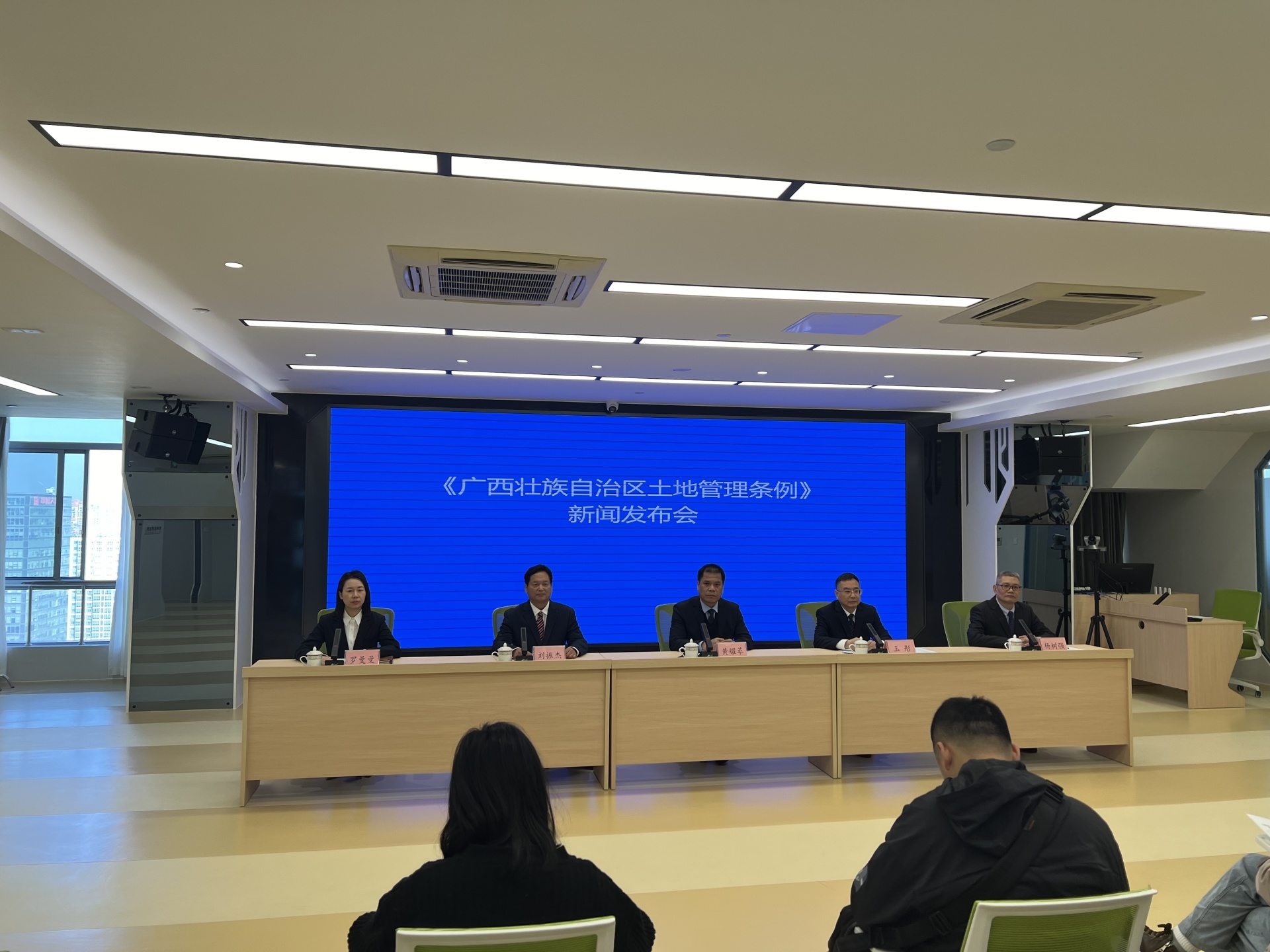
The 'Guangxi Zhuang Autonomous Region Land Management Regulations', entrusted to Guangxi Tongwang Law Firm for the entire legislative drafting process, will be implemented on January 1, 2024. At today's press conference on the 'Regulations', Huang Yaoge, Deputy Director of the Legislative Affairs Commission of the Standing Committee of the Autonomous Region People's Congress, stated that the promulgation of this local regulation marks a new stage in the legalization and standardization of land management in our region, which will effectively regulate land management and protection in our region, effectively protect cultivated land, ensure the rational development and utilization of land, and promote sustainable economic and social development.
In January 2020, the drafting unit of the 'Regulations', the Autonomous Region Department of Natural Resources, signed a contract with Tongwang Law Firm, entrusting Tongwang Law Firm to undertake the drafting task of the 'Regulations'. After accepting the commission, Tongwang Law Firm formed a legislative drafting team composed of five people, including Huang Qiangguang, Hou Jie, Liao Yuan, Huang He, and He Caibin.
From 2020 to 2022, the drafting team followed the leaders of the Autonomous Region Department of Natural Resources' Regulations Division and other relevant departments to conduct two rounds of research in 14 cities in the region, gaining an in-depth understanding and sorting out the key and difficult issues and legislative needs in land management in our region; They went to Zhejiang, Jiangxi, Shandong, Jiangsu, Hunan and other places to investigate the legislative revision of land management outside the region, and achieved beneficial reference results, which laid a solid foundation for the high-quality preparation of legislative research reports and the drafting of the 'Regulations' framework.
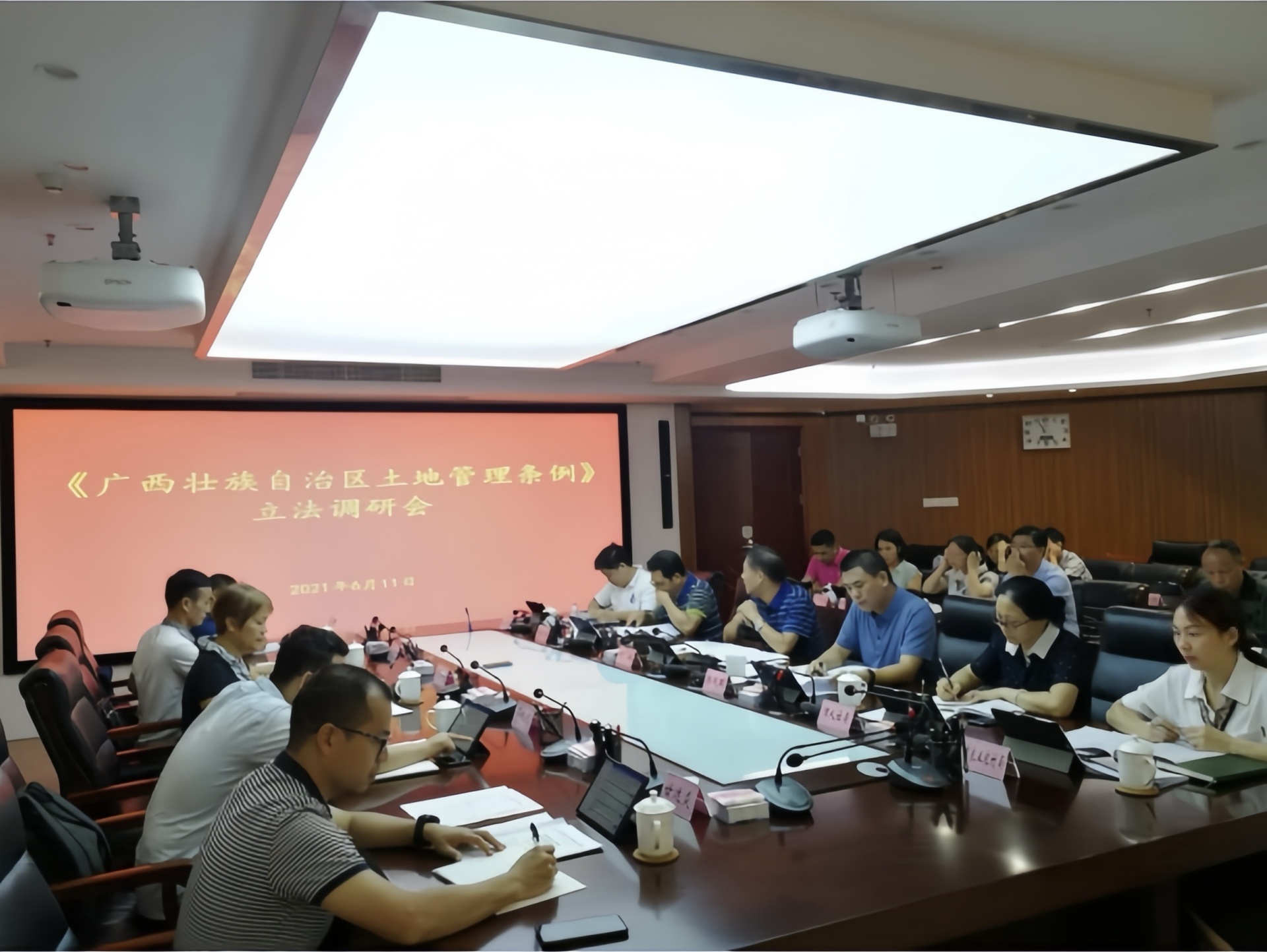
In the specific system design stage of the 'Regulations', the drafting team widely collected legislative reference materials such as laws, administrative regulations, rules, relevant local regulations, and other normative documents, based on the superior law as the legislative basis, drawing on advanced legislative experience outside the region, extracting the main points of normative documents, and drafted the draft 'Regulations' in combination with the actual situation in our region. Under the organization of the Autonomous Region Department of Natural Resources, a number of expert demonstration meetings, risk assessment meetings, and legislative coordination meetings were held, and the legality, rationality, logic, and operability of the draft 'Regulations' were improved according to the opinions and suggestions of the meetings.
On September 22, 2023, the Fifth Meeting of the Standing Committee of the Fourteenth People's Congress of the Autonomous Region deliberated and approved the 'Regulations'.
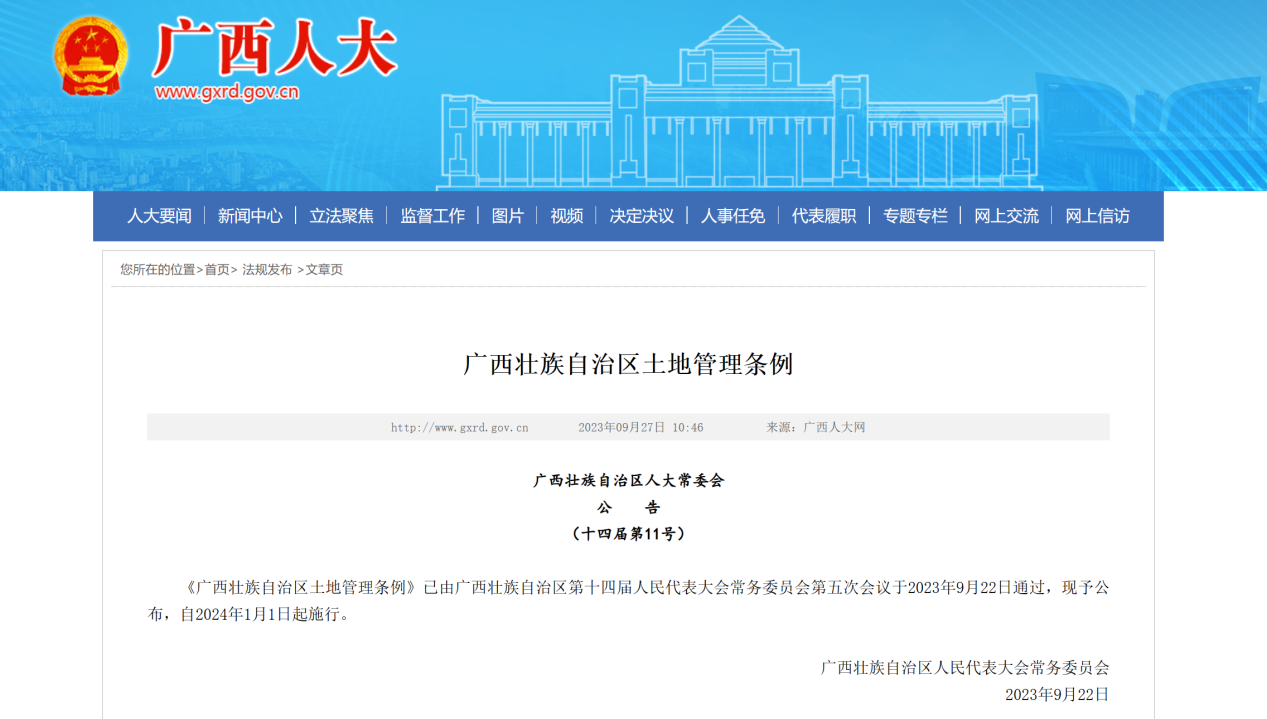
The 'Regulations' consists of eight chapters and 66 articles, including general provisions, territorial space planning, cultivated land protection, land conversion and expropriation, construction land use and management, supervision and inspection, legal liability, and supplementary provisions, with nine characteristics and highlights:
First, the implementation of the field chief system. The comprehensive implementation of the field chief system is an important working mechanism summarized in Guangxi's practice of strengthening cultivated land protection in recent years. By clarifying the implementation of the field chief system through legislation, the field chief system has been effectively promoted from 'name' to 'reality', providing a strong legal guarantee for further consolidating the main responsibility of governments at all levels in the region to protect cultivated land and strengthening the performance of duties by field chiefs at all levels.
The second is to increase the guarantee of grain planting income and the incentive mechanism for cultivated land protection and grain production. In order to mobilize the enthusiasm of units and individuals in cultivated land protection and grain production, county-level and above people's governments are required to establish a grain planting income guarantee mechanism, establish and improve a cultivated land protection reward mechanism and a grain production incentive mechanism, and firmly hold the red line of cultivated land protection and ensure food security.
The third is to clarify the subject and procedure for the identification of cultivated land damage. The identification of cultivated land damage is the main basis for administrative punishment and judicial trial. Clarifying the subject and procedure for the identification of cultivated land damage through local legislation provides legal support for the identification of cultivated land damage.
The fourth is to clarify the stripping and utilization of the cultivated layer of cultivated land, requiring the people's government at the county level to prepare a plan for the stripping and utilization of the cultivated layer of cultivated land, explore the transaction of stripping the cultivated layer of soil, and refine the statutory obligations of construction units, which is of great significance for effectively supplementing cultivated land, improving the quality of cultivated land, and ensuring biodiversity.
The fifth is to clarify that village planning can be used as the basis for the approval of agricultural land conversion. In order to strengthen the leading role of village planning and help the implementation of rural revitalization, it is clarified for the first time in local regulations that village planning can be used as the basis for the approval of agricultural land conversion after it is approved.
The sixth is to clarify the transfer of 'clean land', and write the requirement of 'clean land' supply into local regulations, providing legal guarantee for curbing the new transfer of 'rough land' in our region, and effectively preventing new land idling.
Seventh, establish an autonomous region land inspection system, clarify the inspection responsibilities of the autonomous region's natural resources authorities, and refine specific land inspection measures. This provides a legal basis for the autonomous region to carry out land inspections, which plays an important role in improving and standardizing land supervision.
The eighth is to establish a flexible land supply system, and incorporate Guangxi's experience in promoting leasing before transfer and reasonably determining the land transfer period within the statutory maximum transfer period into law, reducing land use costs, meeting the differentiated land use needs of industries, and optimizing the legal business environment.
The ninth is to stipulate the hierarchical management of land reserve, clarify the statutory responsibilities of land reserve institutions, and write the innovative experience of land reserve work in our region into local regulations, and enhance the legal status of the land reserve system.
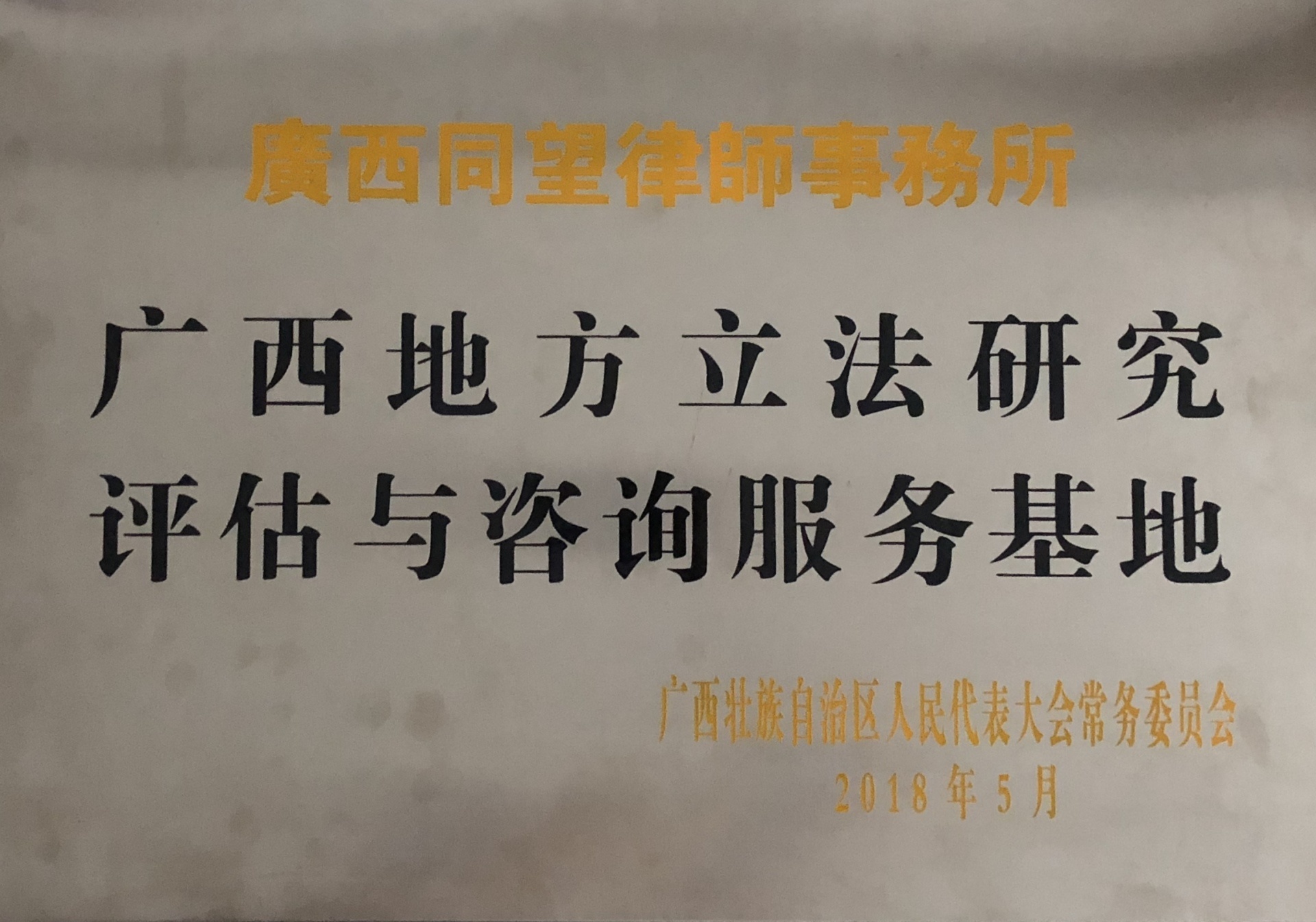
In May 2018, with the approval of the Standing Committee of the Autonomous Region People's Congress, the Guangxi Local Legislation Research and Evaluation and Consulting Service Guangxi Tongwang Law Firm Base was established. This is the first local legislation research, evaluation and consulting service base established by a provincial people's congress in a law firm in China. In February 2021, the Nanning Municipal People's Congress Local Legislation Consulting Service Base settled in Tongwang.
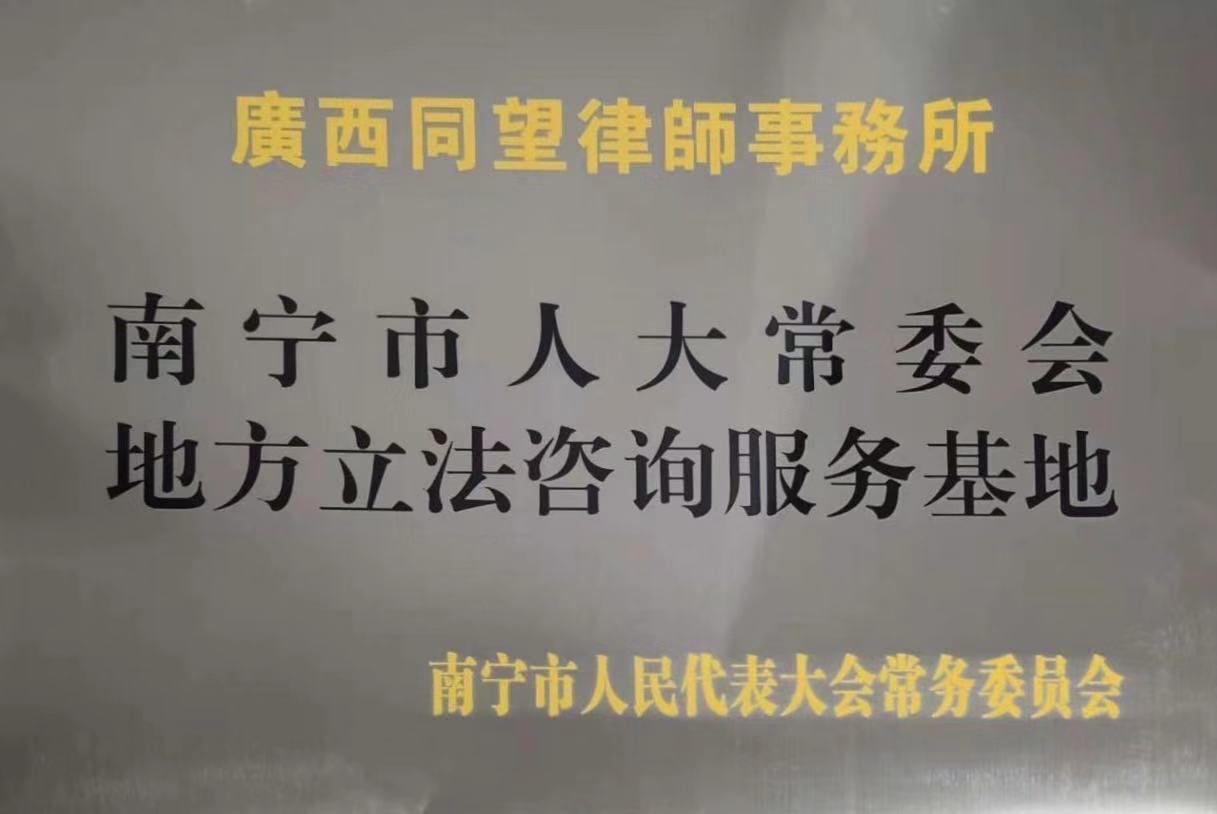
Since the establishment of the Tongwang Legislative Service Base, it has continuously strengthened its own construction and actively played its professional advantages to devote itself to local legislative service work. To date, it has completed 5 major research tasks, including 'Research on the Main Legal Obstacles of Multi-Planning Integration', 'How to Improve the Legal System of the Business Environment in Our Region', 'How Cities with Districts Should Grasp the Constituent Elements, Characteristics and Laws of Urban and Rural Construction and Management Legislation', and 'Research on 'Small Cuts, Small Quick Spirits' Local Legislation'; Independently undertook the legislative drafting tasks of a number of local regulations, including the 'Guangxi Zhuang Autonomous Region Expressway Regulations (Draft)', 'Guangxi Zhuang Autonomous Region Land Management Regulations (Draft)', 'Guangxi Zhuang Autonomous Region Waterway Management Regulations (Revised Draft)', 'Guangxi Zhuang Autonomous Region Southwest Karst National Park Regulations (Draft)' and 'Guangxi Zhuang Autonomous Region Mineral Resources Management Regulations (Revision)'; Undertook the legislative evaluation/special demonstration tasks of local regulations such as the 'Guangxi Zhuang Autonomous Region Property Management Regulations (Revised Draft)', 'Guangxi Zhuang Autonomous Region Citrus Huanglongbing Prevention and Control Regulations (Draft)', 'Guangxi Zhuang Autonomous Region Wildlife Protection Regulations (Draft)', 'Nanning Municipal Home-based Elderly Care Service Regulations (Draft)'; Sent legislative expert consultants/researchers to participate in local regulations legislative argumentation 89 people/times; Comprehensively reviewed the constitutionality, legality, appropriateness and rationality of 62 local regulations, 153 local government regulations, and 64 normative documents of the two courts and issued written review opinions.
More News