


Tongwang Attention | Comparison Table of Revised Articles of Judicial Interpretation of the New and Old Civil Procedure Law (Officially Implemented from April 10, 2022)
Time:
2022-04-08
Author:
Source:
The Supreme People's Court Judicial Case Research Institute, Approaching the Civil Code
Visits:
158
On March 22, 2022, the 1866th meeting of the Adjudication Committee of the Supreme People's Court deliberated and approved the 'Decision of the Supreme People's Court on Amending the Interpretation of the Supreme People's Court on the Application of the Civil Procedure Law of the People's Republic of China' (Fa Shi [2022] No. 11, hereinafter referred to as the 'Decision'), which came into effect on April 10, 2022.
The Civil Procedure Law is the basic rule governing civil litigation procedures and the basic procedural legal basis for the people's courts to hear and execute civil cases. On December 24, 2021, the 32nd meeting of the Standing Committee of the 13th National People's Congress deliberated and approved the 'Decision on Amending the Civil Procedure Law of the People's Republic of China', which amended the judicial confirmation procedure, the simplified procedure and the procedure for small claims, the sole-judge procedure, online litigation, and service rules, and added 7 new articles, resulting in changes to the overall order of the articles. After the revision of the Civil Procedure Law, the article numbers of the Civil Procedure Law cited in the 'Interpretation of the Supreme People's Court on the Application of the Civil Procedure Law of the People's Republic of China' (hereinafter referred to as the 'Interpretation of the Civil Procedure Law') are inconsistent with the new Civil Procedure Law, and the relevant article expressions also need to be adjusted urgently.
In order to effectively implement the new Civil Procedure Law, in January 2022, the Supreme People's Court launched the revision of the 'Interpretation of the Civil Procedure Law'. Under the strong guidance of the Legislative Affairs Commission of the Standing Committee of the National People's Congress, after conducting research in the courts of Shanghai and Nantong, and soliciting opinions from experts, scholars, and relevant departments within the court, the 'Decision' was formed and deliberated and approved by the Adjudication Committee of the Supreme People's Court.
Based on the actual situation of adjudication work and adhering to the demand orientation, the 'Decision' strictly compares the relevant provisions of the new Civil Procedure Law to make adaptive revisions to the article numbers and expressions of the 'Interpretation of the Civil Procedure Law', involving a total of 16 articles. The main contents are as follows:
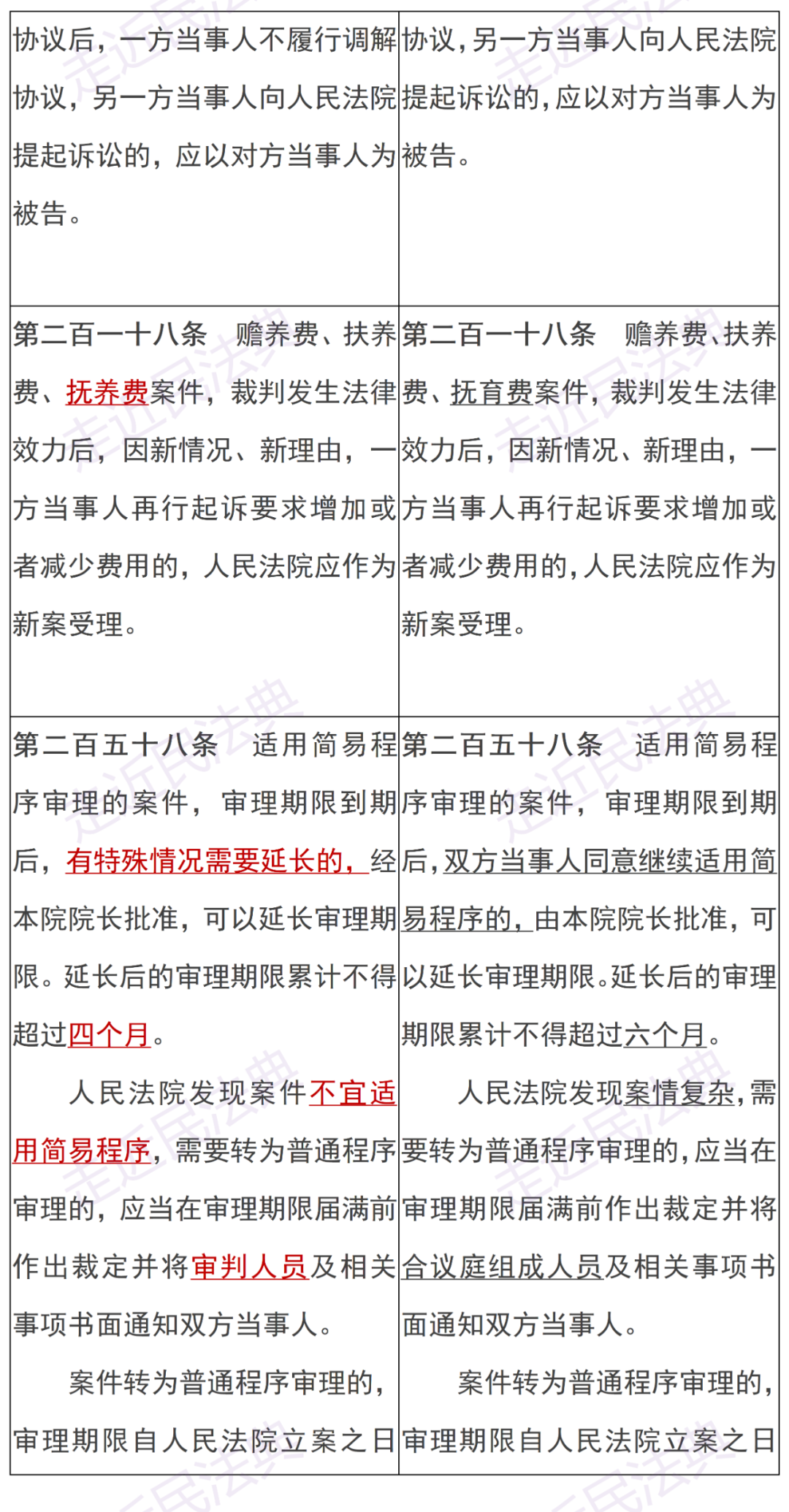
First, revise the relevant provisions on extending the trial period for cases under the simplified procedure. In accordance with the provisions of Article 164 of the new Civil Procedure Law, the condition for extending the trial period for cases under the simplified procedure is changed from 'both parties agree to continue to apply the simplified procedure' to 'there are special circumstances that require extension', and the maximum trial period for cases under the simplified procedure is changed from six months to four months.
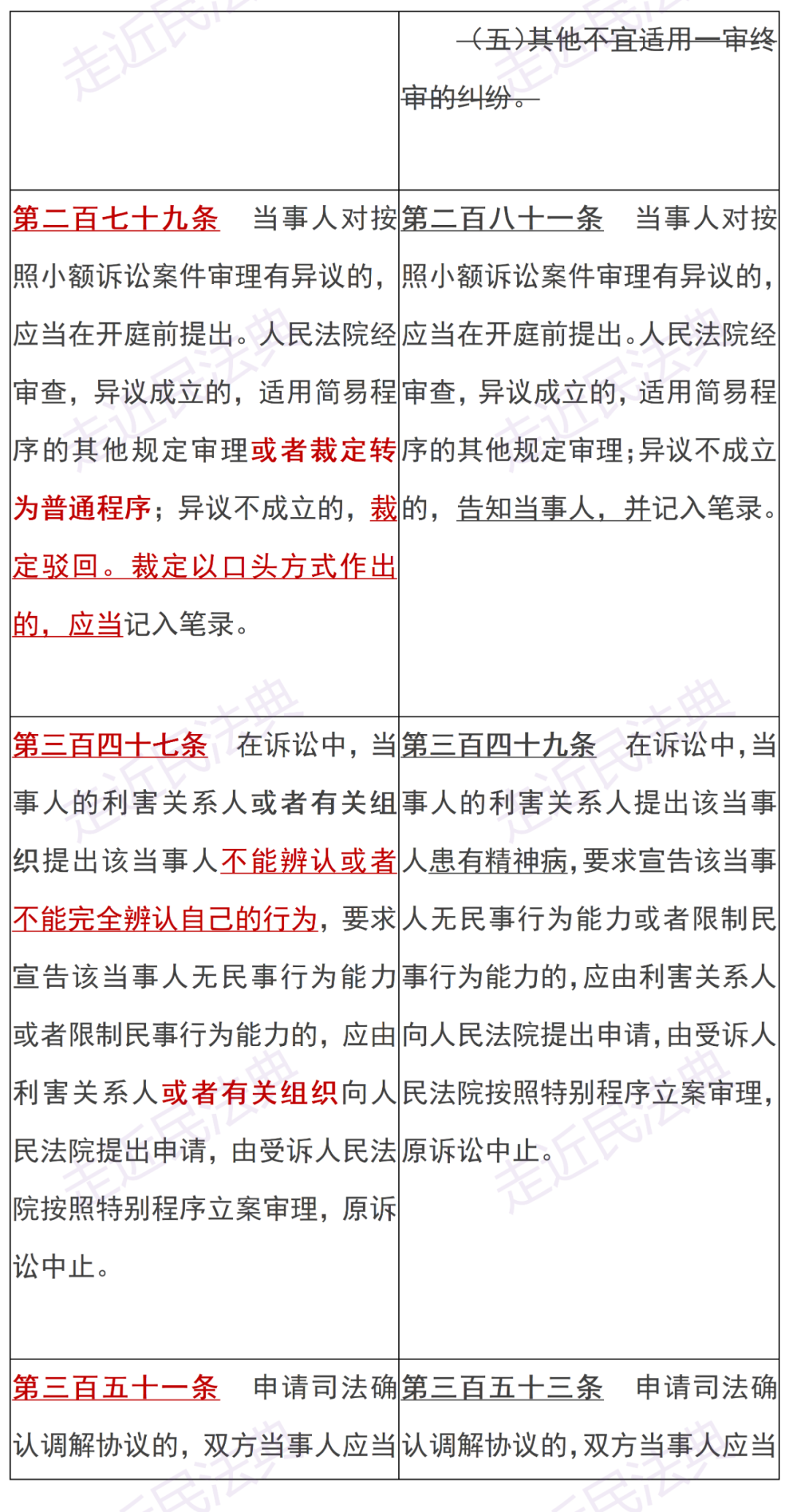
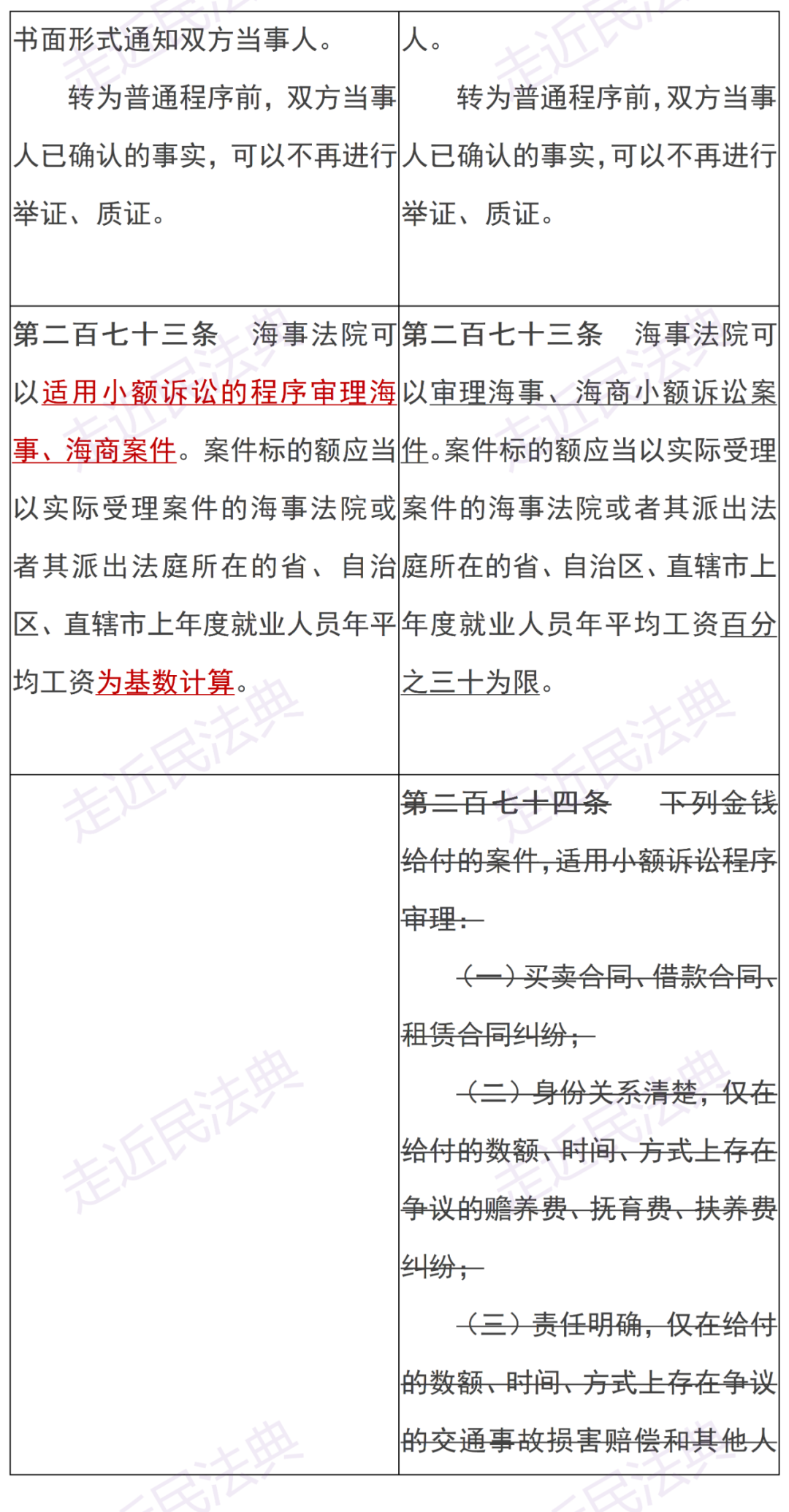
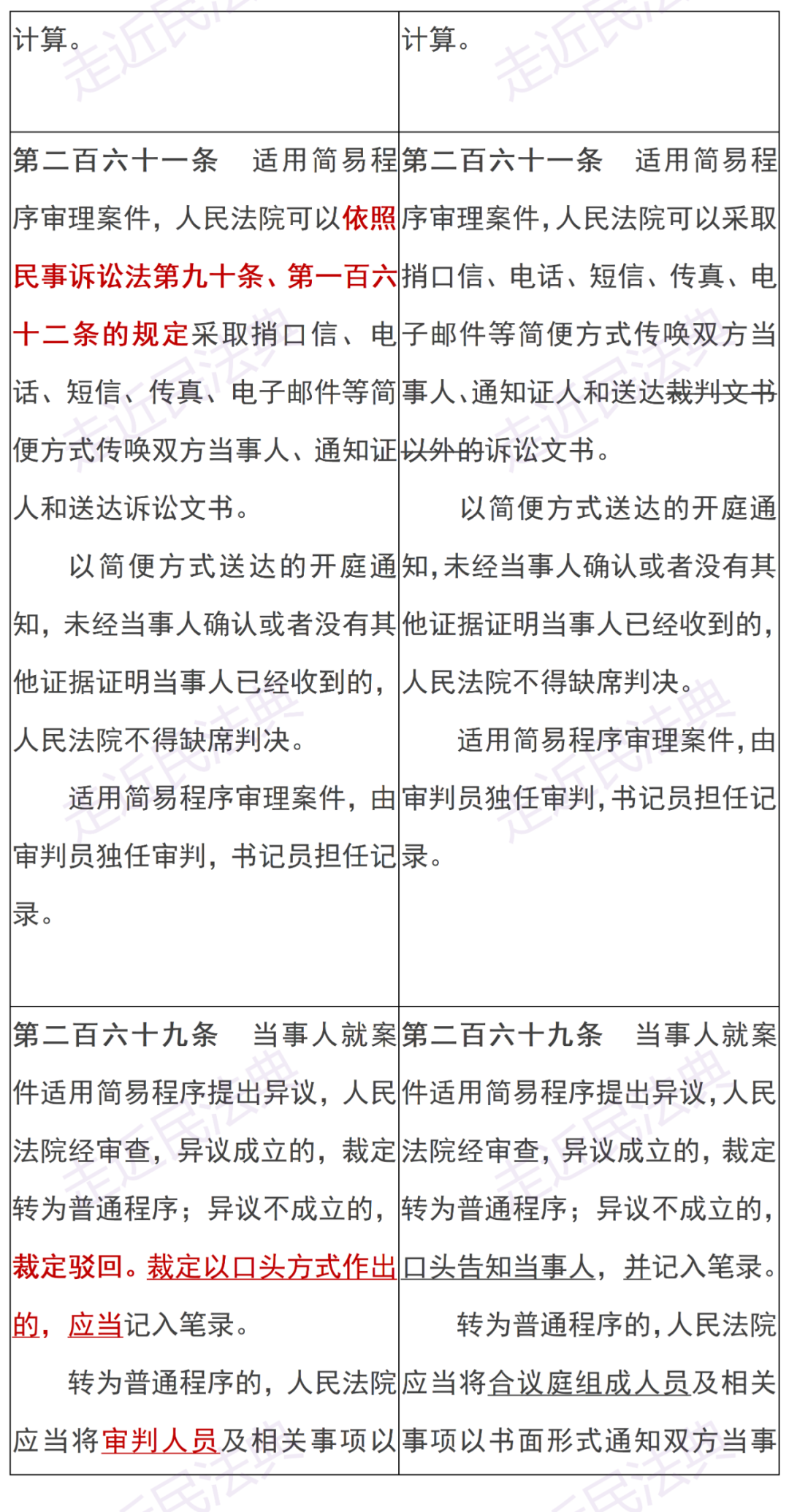
Second, revise the relevant provisions on procedure conversion and procedure objection. In accordance with the provisions of Article 170 of the new Civil Procedure Law, the condition for converting the simplified procedure to the ordinary procedure is changed from 'the case is complicated' to 'it is not appropriate to apply the simplified procedure', reserving space for further refinement of the procedure conversion standards. At the same time, it is clarified that if a party's objection to the application of the simplified procedure or the small claims procedure is not established, the people's court shall rule to reject it, and the ruling may be made orally.
Third, revise the provisions on serving litigation documents in a simple manner. According to the provisions of the new Civil Procedure Law on electronic service, it is clarified that the people's court may, in accordance with the provisions of Articles 90 and 162 of the Civil Procedure Law, summon both parties, notify witnesses, and serve litigation documents by means of simple methods such as oral messages, telephone, SMS, fax, and email.
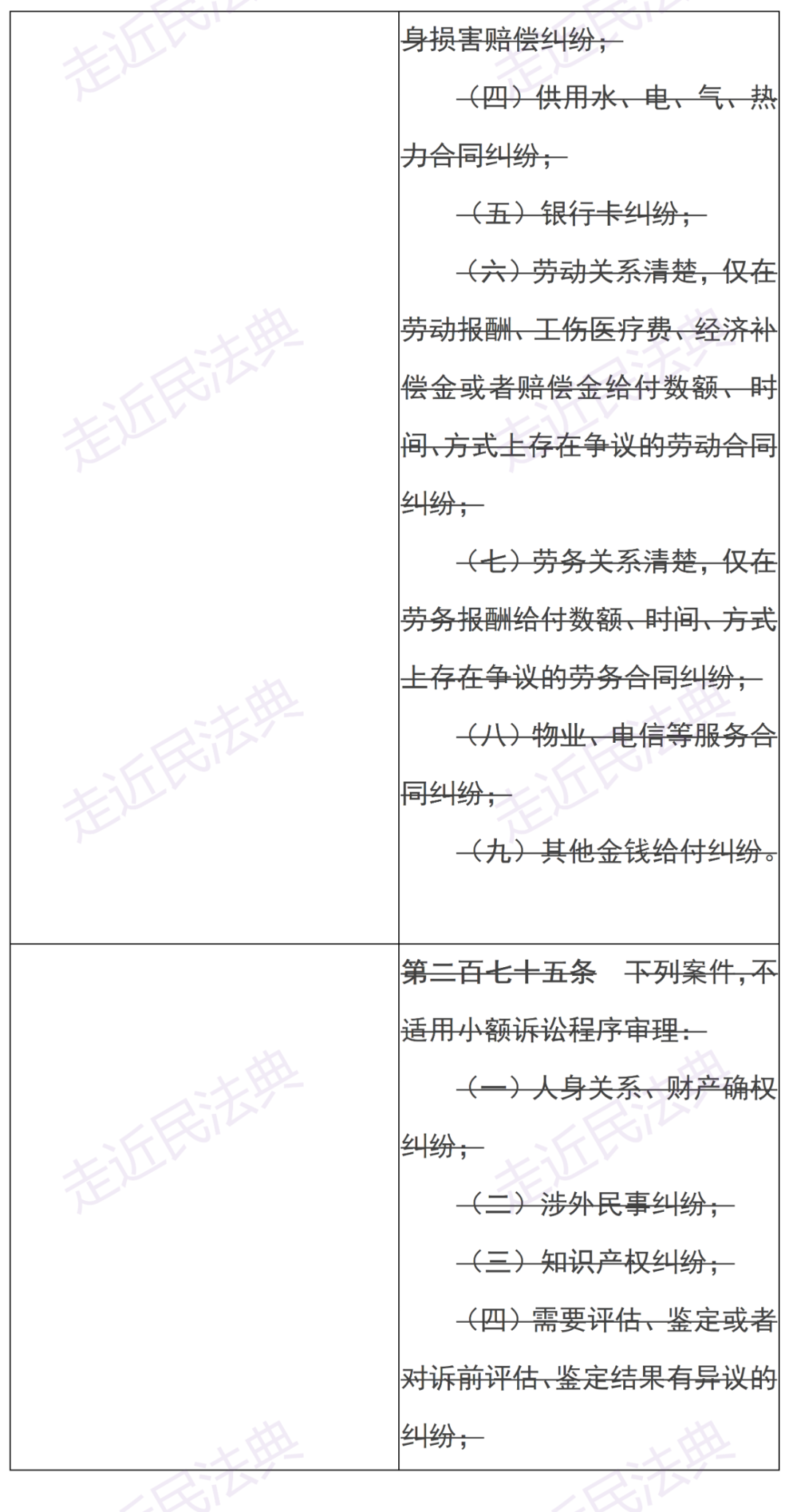
Fourth, revise the relevant provisions on small claims cases. According to the provisions of Articles 165 and 166 of the new Civil Procedure Law, delete the provisions of the original Articles 274 and 275 of the 'Interpretation of the Civil Procedure Law' regarding the types of cases to which the small claims procedure can and cannot be applied; adjust the standard of the amount in controversy for the application of the small claims procedure in maritime and maritime commercial cases, and allow the parties to choose to apply it by agreement in accordance with the law.
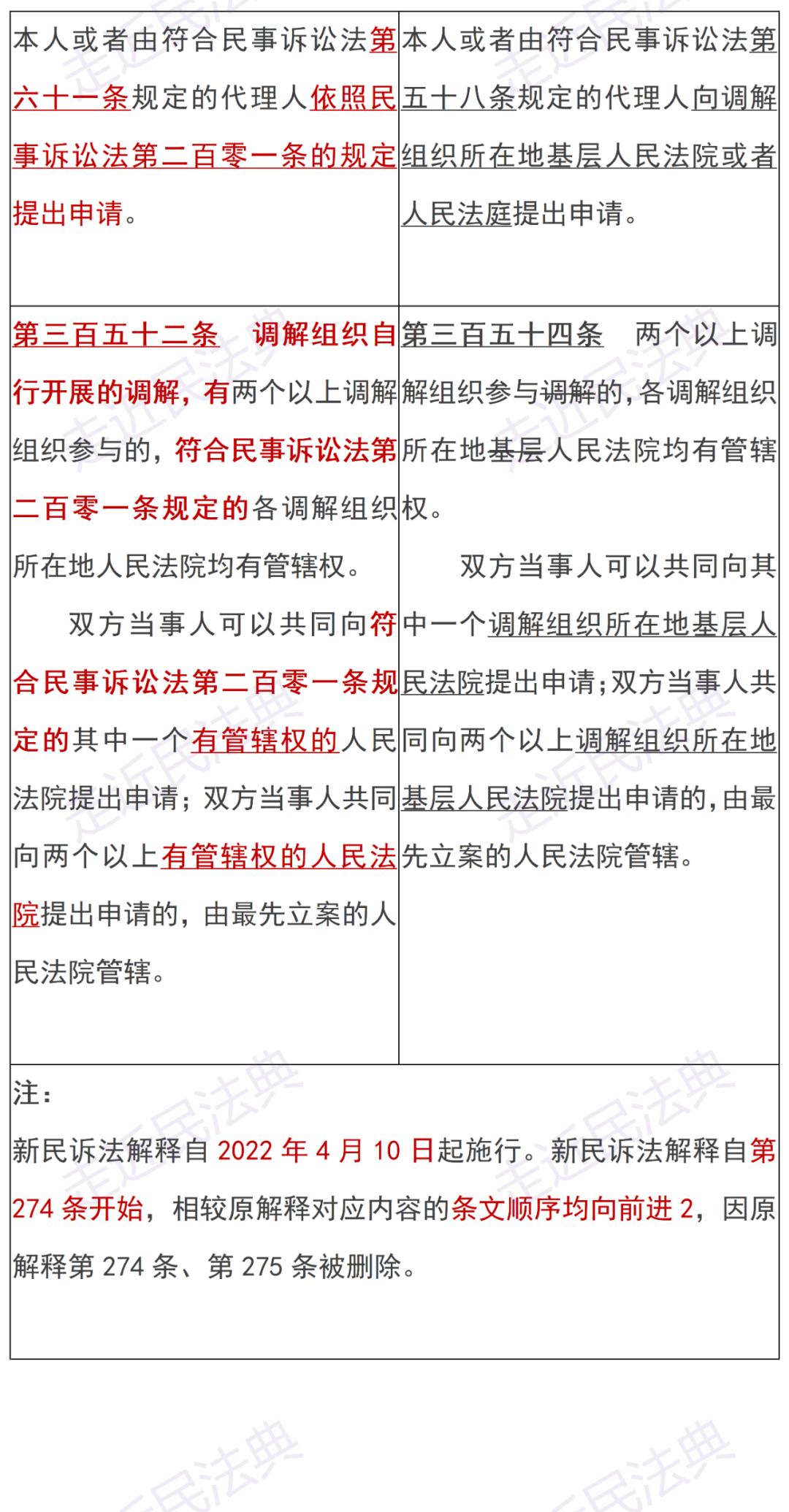
Fifth, revise the relevant provisions on joint jurisdiction of judicial confirmation cases. In accordance with the provisions of Article 201 of the new Civil Procedure Law on the rules of jurisdiction for judicial confirmation cases, make adaptive revisions to the issue of jurisdiction for judicial confirmation cases where mediation organizations conduct mediation on their own.
Sixth, adjust the article numbers of the cited Civil Procedure Law and the article order of the judicial interpretation itself. This is a technical operation problem that needs to be solved urgently in judicial practice. Considering that this revision requires adjusting the article numbers of the cited Civil Procedure Law in as many as 200 places, and the article order of the judicial interpretation itself also needs to be adjusted, the 'Decision' adheres to the principle of simplification and unifies the article numbers of the Civil Procedure Law cited in the 'Interpretation of the Civil Procedure Law' and the article order of the 'Interpretation of the Civil Procedure Law' itself through two articles. At the same time as the 'Decision' is issued, the new text of the 'Interpretation of the Civil Procedure Law' is also published to facilitate the accurate citation of the corresponding articles of the judicial interpretation by the people's courts at all levels.
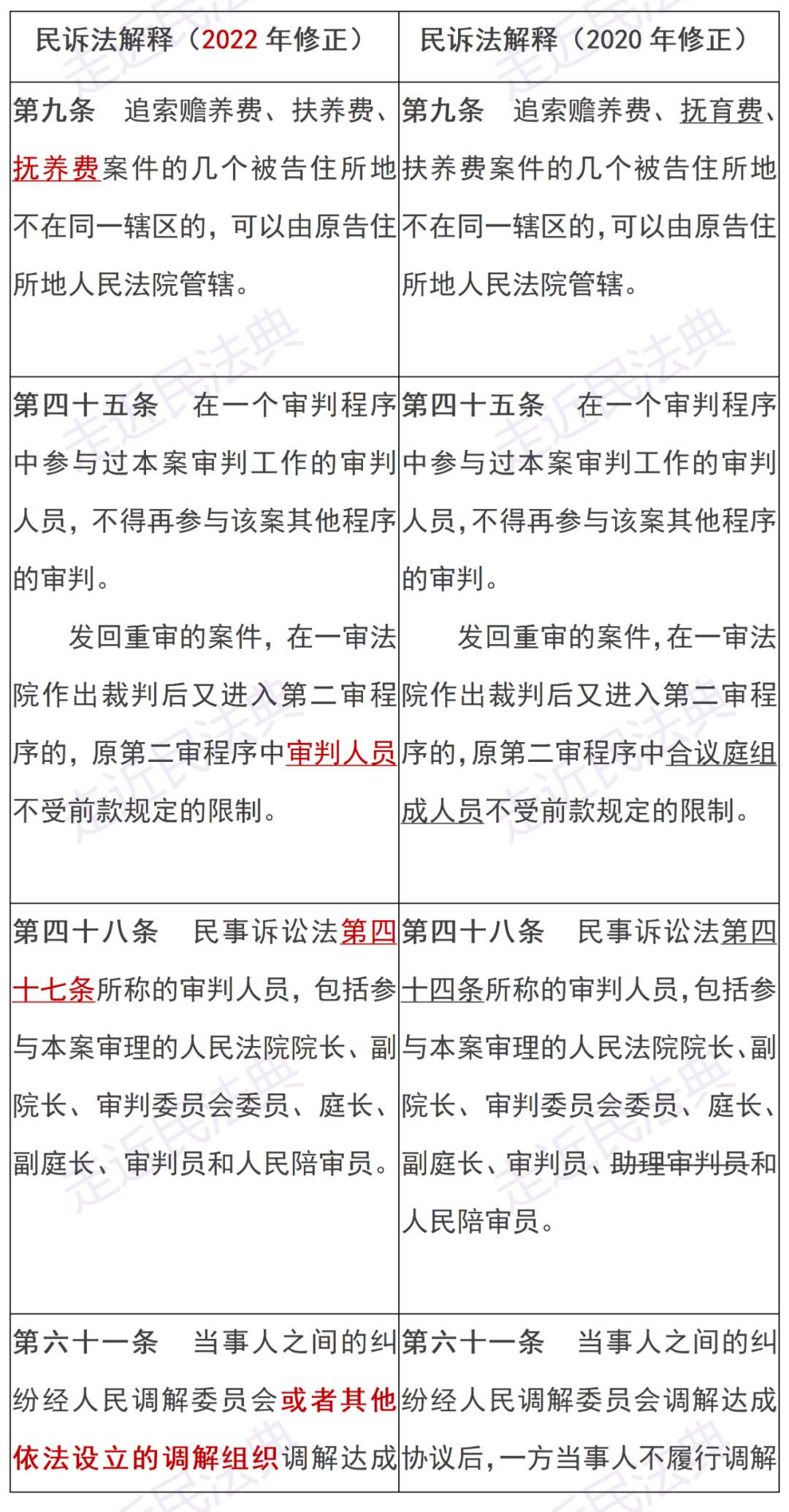
Additionally, the 'Decision' revised certain wording. For instance, '抚育费' (fǔ yù fèi) in Articles 9 and 218 was changed to '抚养费' (fǔ yǎng fèi) to ensure the 'Interpretation of the Civil Procedure Law' aligns with the new Civil Procedure Law and other relevant laws.
The old and new articles are now sorted and compared, and presented in tabular form.
Explanation: The left column is the new interpretation, and the right column is the original interpretation. New content is in bold; changes in wording are underlined; deleted original provisions are struck through. All changes in the new interpretation (including additions and changes in wording) are shown in red.
Comparison Table of Revised Articles of the New and Old Civil Procedure Law Judicial Interpretations
Source: The Supreme People's Court Research Institute of Judicial Cases / Understanding the Civil Code
More News