


Tongwang Sharing丨How to Distinguish Between Compensation and Damages in Labor Disputes? A Detailed Explanation
Time:
2021-12-14
Author:
Source:
Visits:
40
Source: Judicial Case Research Institute of the Supreme People's Court
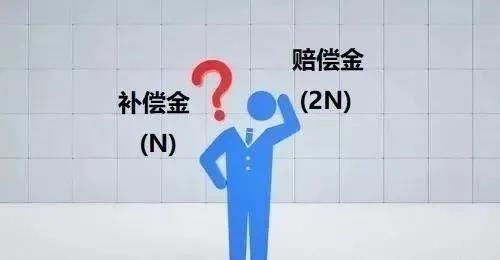
After the termination of a labor contract, it is common for laborers to claim compensation or damages from employers. Although there is only a one-word difference between compensation and damages, the applicable conditions for the two are very different and easily confused.
So, what are the differences between the two? As a laborer, should you claim compensation or damages from your employer after the termination of the labor contract?
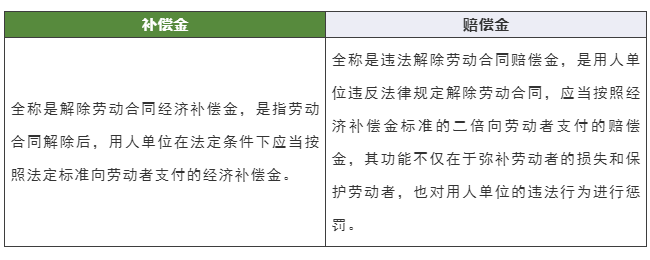
Compensation VS Damages
How to distinguish? Let's sort it out.
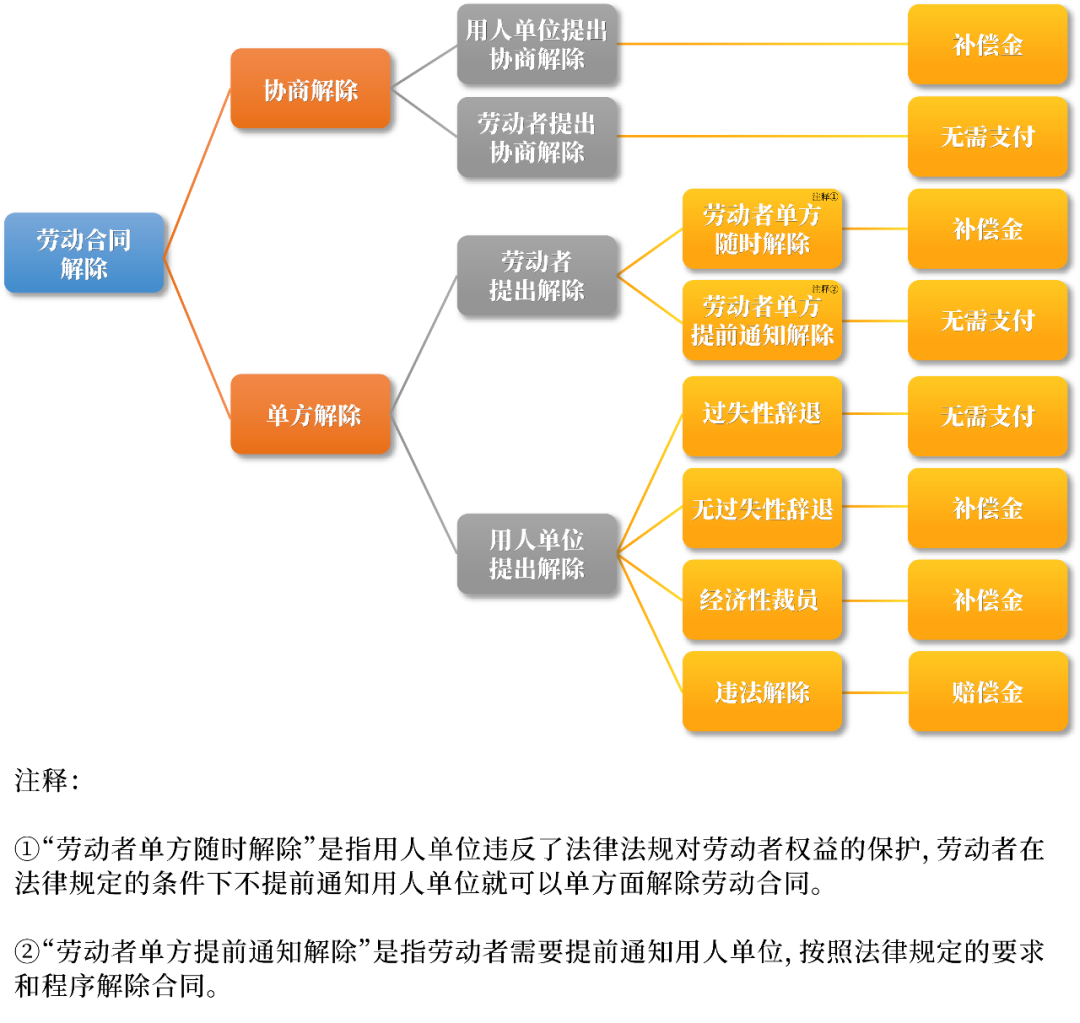
I. Negotiated Termination
1. The employer proposes a negotiated termination motion
A clothing company specializes in processing foreign clothing production orders. Mr. Liang is the head of the production department in the clothing factory under the company. Later, due to a sharp reduction in foreign orders, the clothing company decided to close the clothing factory where Mr. Liang was located, and proposed to terminate the labor contract with Mr. Liang, and Mr. Liang agreed. Subsequently, Mr. Liang claimed that the clothing company should pay economic compensation for the termination of the labor contract in accordance with the statutory standards, which will be supported.
Subject of termination: Proposed by the employer
Conditions for establishment:
Article 36 of the Labor Contract Law Article 36 of the Labor Contract Law: An employer and an employee may terminate the labor contract upon consensus through negotiation.
Article 46 Article 46: Under any of the following circumstances, the employer shall pay economic compensation to the employee: ... where the employer proposes to the employee to terminate the labor contract in accordance with Article 36 of this Law and terminates the labor contract upon consensus through negotiation; ...
Legal effect: The employer pays compensation
2. The employee proposes a negotiated termination motion
During his work in the clothing company, Mr. Liang moved his family address from the city to the distant suburbs due to the relocation of his house, so he negotiated with the clothing company to request the termination of the labor contract on the same day, and the clothing company agreed. In this case, the motion for negotiated termination of the labor contract was proposed by Mr. Liang, and the clothing company may not pay economic compensation for the termination of the labor contract.
Subject of termination: Proposed by the employee
Conditions for establishment:
Article 36 of the Labor Contract Law Article 36 of the Labor Contract Law: An employer and an employee may terminate the labor contract upon consensus through negotiation.
Article 37 An employee may terminate the labor contract by notifying the employer in writing thirty days in advance. An employee may terminate the labor contract by notifying the employer three days in advance during the probation period.
Legal effect: The employer does not need to pay compensation or damages
II. Termination proposed by the employee
1. The employee unilaterally terminates at any time
The clothing company has been in arrears with Mr. Liang's salary for 3 consecutive months on the grounds of financial difficulties. Mr. Liang then sent a written notice of termination of the labor contract to the company on the grounds that the company failed to pay labor remuneration in a timely and full manner. In this case, Mr. Liang may claim economic compensation for the termination of the labor contract from the company. If Mr. Liang claims damages for illegal termination of the labor contract, he will not be supported.
Subject of termination: Employee
Conditions for establishment:
Article 38 of the Labor Contract Law An employee may terminate the labor contract if the employer has any of the following circumstances:
(1) Failure to provide labor protection or labor conditions as agreed in the labor contract;
(2) Failure to pay labor remuneration in a timely and full manner;
(3) Failure to pay social insurance premiums for employees in accordance with the law;
(4) The rules and regulations of the employer violate the provisions of laws and regulations and damage the rights and interests of employees;
(5) The labor contract is invalid due to the circumstances stipulated in paragraph 1 of Article 26 of this Law;
(6) Other circumstances in which employees may terminate the labor contract as stipulated by laws and administrative regulations.
If an employer forces an employee to work by means of violence, threats or illegal restrictions on personal freedom, or if the employer violates regulations, orders or forces employees to engage in dangerous operations that endanger the personal safety of the employee, the employee may immediately terminate the labor contract without prior notice to the employer.
Article 46 Under any of the following circumstances, the employer shall pay economic compensation to the employee:
(1) The employee terminates the labor contract in accordance with Article 38 of this Law;
Legal effect: The employer pays compensation
2. The employee unilaterally gives advance notice of termination
If the employer has any of the circumstances stipulated in Article 38 of the Labor Contract Law, the employee may propose to terminate the labor contract and require the employer to pay economic compensation for the termination of the labor contract. Otherwise, if the employee unilaterally proposes to terminate the labor contract, he will not be able to obtain economic compensation for the termination of the labor contract.
Subject of termination: Employee
Conditions for establishment:
Article 37 of the Labor Contract Law An employee may terminate the labor contract by notifying the employer in writing thirty days in advance. An employee may terminate the labor contract by notifying the employer three days in advance during the probation period.
Legal effect: The employer does not need to pay compensation or damages

III. Termination proposed by the employer
1. Dismissal for fault
During his tenure as the head of the production department, Mr. Liang took advantage of his position to secretly carry a batch of clothing that did not meet the quality standards out of the factory and sold it through a friend. After investigation, the company terminated the labor relationship with Mr. Liang on the grounds that Mr. Liang seriously violated the company's rules and regulations, used his position to seek improper benefits, and caused significant losses to the company. In this case, Mr. Liang will not be able to obtain damages for illegal termination of the labor contract or economic compensation for termination of the labor contract.
Subject of termination: Employer
Conditions for establishment:
Article 39 of the Labor Contract Law An employer may terminate the labor contract if an employee has any of the following circumstances:
(1) It is proved during the probation period that he does not meet the employment conditions;
(2) Seriously violating the rules and regulations of the employer;
(3) Serious dereliction of duty, engaging in malpractice for personal gain, causing significant damage to the employer;
(4) The employee establishes a labor relationship with other employers at the same time, which seriously affects the completion of the work tasks of the unit, or refuses to correct it after being raised by the employer;
(5) The labor contract is invalid due to the circumstances stipulated in Item 1 of the first paragraph of Article 26 of this Law;
(6) Being pursued for criminal responsibility in accordance with the law.
Legal effect: The employer does not need to pay compensation or damages
2. No-fault Dismissal
Due to a sharp decrease in orders, the clothing company decided to close its clothing factory in Shanghai. The company negotiated with Mr. Liang to transfer him to the clothing factory in Suzhou to serve as the head of the production department or terminate the labor contract and give him economic compensation of 3 months' salary. Mr. Liang said that he was unwilling to go to Suzhou and did not accept the company's plan to negotiate the termination of the labor contract. The company had no choice but to terminate the labor contract between the two parties. Because the situation when Mr. Liang and the company concluded the labor contract changed due to the reduction of orders, the company terminated the labor contract after failing to reach an agreement with Mr. Liang through negotiation. At this time, Mr. Liang can claim that the company pays economic compensation for the termination of the labor contract. If Mr. Liang requests the company to pay compensation for illegal termination of the labor contract, it will not be supported.
Subject of termination: Employer
Conditions for establishment:
Article 40 of the "Labor Contract Law" Under any of the following circumstances, the employer may terminate the labor contract after notifying the employee in writing thirty days in advance or paying the employee one month's salary in addition:
(1) The employee is suffering from an illness or non-work-related injury, and is unable to perform the original work or the work arranged by the employer after the expiration of the prescribed medical treatment period;
(2) The employee is incompetent for the job and is still incompetent after training or adjustment of the job position;
(3) The objective circumstances on which the labor contract was based at the time of its conclusion have undergone major changes, making it impossible to perform the labor contract, and the employer and the employee fail to reach an agreement on amending the content of the labor contract through consultation.
Legal effect: The employer pays compensation
3. Economic Redundancy
With the continuous reduction of foreign orders, the clothing company suffered serious losses. The company had a large amount of debts that could not be fulfilled on time. The company's creditors filed an application with the court for bankruptcy reorganization of the clothing company, and the court ruled to start the bankruptcy reorganization procedure. The clothing company then decided to lay off employees, explained the layoff situation to the labor union, listened to the labor union's opinions, and reported to the Human Resources and Social Security Bureau. Mr. Liang later learned that he was on the layoff list. In this case, Mr. Liang can claim that the company pays economic compensation for the termination of the labor contract. If Mr. Liang requests the company to pay compensation for illegal termination of the labor contract, it will not be supported.
Subject of termination: Employer
Conditions for establishment:
Article 41 of the "Labor Contract Law" Under any of the following circumstances, if it is necessary to reduce 20 or more employees, or if the number of employees to be reduced is less than 20 but accounts for more than 10% of the total number of employees of the enterprise, the employer shall explain the situation to the labor union or all employees 30 days in advance, listen to the opinions of the labor union or employees, and then report the redundancy plan to the labor administrative department before the employees can be reduced:
(1) Reorganization is carried out in accordance with the provisions of the Enterprise Bankruptcy Law;
(2) Serious difficulties occur in production and operation;
(3) The enterprise changes its production, undergoes major technological innovation, or adjusts its business methods, and still needs to reduce personnel after changing the labor contract;
(4) Other major changes in the objective economic circumstances on which the labor contract was based at the time of its conclusion make it impossible to perform the labor contract.
Article 46 Under any of the following circumstances, the employer shall pay economic compensation to the employee:
(4) The employer terminates the labor contract in accordance with the provisions of the first paragraph of Article 41 of this Law;
Legal effect: The employer pays compensation
4. Illegal Termination
On January 10, 2020, Mr. Liang was hospitalized due to illness. According to the hospital diagnosis, Mr. Liang needs to be treated until March 20. On March 1, the company terminated the labor contract on the grounds that Mr. Liang was unable to perform his job due to health reasons. Because Mr. Liang was ill, the company terminated the labor contract during his medical treatment period, which constituted an illegal termination. Mr. Liang's request for compensation for illegal termination of the labor contract should be supported.
Subject of termination: Employer
Conditions for establishment:
Article 42 of the "Labor Contract Law" The employer shall not terminate the labor contract in accordance with the provisions of Article 40 and Article 41 of this Law if the employee is under any of the following circumstances:
(1) The employee engaged in occupational disease hazard operations has not undergone an occupational health examination before leaving the job, or is a suspected occupational disease patient during the diagnosis or medical observation period;
(2) Suffering from an occupational disease or work-related injury in this unit and being confirmed to have lost or partially lost the ability to work;
(3) Suffering from an illness or non-work-related injury during the prescribed medical treatment period;
(4) Female employees are in pregnancy, maternity, and lactation periods;
(5) Having worked continuously in this unit for 15 years and being less than 5 years away from the legal retirement age; (6) Other circumstances stipulated by laws and administrative regulations.
It should be noted that, Article 42 of the "Labor Contract Law" is a legal provision that employers shall not unilaterally terminate labor contracts. If the employee meets the above-mentioned circumstances, the employer's termination of the labor contract will constitute an illegal termination. In addition, if the employer cannot provide evidence to prove that its termination behavior complies with the law, or the evidence provided is insufficient to prove that its termination behavior complies with the law, it shall be deemed to constitute an illegal termination. At this time, the employee can claim compensation for illegal termination of the labor contract.
Legal effect: The employer pays compensation
4. Calculation Standard of Compensation and Indemnity
1. Compensation
Compensation = Monthly salary (average salary for the 12 months before termination) × Number of years the employee has worked in the unit (i.e., N)
Article 47 of the "Labor Contract Law" Economic compensation shall be paid to the employee based on the number of years the employee has worked in the unit, with one month's salary paid for each full year. If it is more than six months but less than one year, it shall be calculated as one year; if it is less than six months, the employee shall be paid economic compensation of half a month's salary. If the employee's monthly salary is higher than three times the average monthly salary of employees in the municipality directly under the Central Government or the city divided into districts where the employer is located, as announced by the people's government at the municipal level, the standard for paying economic compensation to him shall be three times the amount of the average monthly salary of employees, and the maximum number of years for paying economic compensation to him shall not exceed twelve years. The monthly salary mentioned in this article refers to the average salary of the employee in the twelve months before the labor contract is terminated.
2. Indemnity
Indemnity = Compensation × 2 (i.e., 2N)
Article 87 of the "Labor Contract Law" If the employer terminates or terminates the labor contract in violation of the provisions of this Law, it shall pay compensation to the employee in accordance with twice the standard of economic compensation stipulated in Article 47 of this Law.
5. Can compensation and indemnity be claimed at the same time?
From the perspective of the nature and applicable circumstances of severance pay and compensation, paying severance pay is a statutory responsibility that the employer should bear after the termination of the labor contract, which is compensatory in nature; while compensation is mainly for the employer's illegal termination of the labor contract, which is punitive in nature. Therefore, the two are in a parallel relationship, not an overlapping relationship, and cannot be applied at the same time.
More News